
People-oriented design
The Microbial Home is viewed as a cyclical biological machine where wastes like sewage, effluent, garbage, wastewater are filtered, processed and recycled to be used as inputs for the various home functions. The project includes various aspects like a Bio Digester Island and Larder in the kitchen, Urban Beehive, Bio-light, Apothecary, Filtering Squatting Toilet and Paternoster Plastic Waste Up-cycler.
Designer: Philips Design
Bio Digester Island


- Central hub in the Microbial Home system.
- Consists of a methane digester, which converts bathroom waste solids and vegetable trimmings into methane gas that is used to power a series of functions in the home.
- The hub is designed as a repositionable kitchen island, including a chopping surface with vegetable waste grinder, a gas cooking range, a glass tank that shows energy reserves and glass elements showing pressure, volume and readiness of compost sludge.
- Materials used in the design are copper, cast iron, glass and bamboo.
- ‘Bio-gas’ is produced by developing a culture of suitable bacteria living on organic waste material from the home.
- The gas from the methane digester is fed to a cooking range and gas mantle lights.
- Water pipes are preheated by the digester and channeled to other components.
- The digester needs a constant supply of waste material and water.
- The dehydrated sludge residue from the digester can be safely removed and used as compost.
Larder


- The larder is a system designed to keep ‘living food’ fresh, by using natural processes (as opposed to dead food in the refrigerator).
- The larder consists of an evaporative cooler and vegetable storage system built into a dining table.
- Twin-walled terra cotta evaporative cooler is at its center, the compartments and chambers vary in wall thicknesses and volumes, and are designed to keep different types of food at different optimal temperatures.
- The outer surface of the cooler is warmed by hot water pipes, which have been pre-heated by the methane digester in the Microbial Home system.
- Above the table is a ceramic garden and larder where vegetable groups are grown and stored on the basis of their symbiotic chemistry.
- The table is made from reclaimed wood, supported by a cast iron structure that consists of water and gas pipes.
Urban Beehive


- The urban beehive is a concept for keeping bees at home.
- The beehive is designed to allow us a glimpse into the world of these industrious creatures and to harvest the honey that they produce.
- It consists of two parts: entry passage and flower pot outside, and glass vessel containing an array of honeycomb frames, inside.
- The glass shell filters light to let through the orange wavelength which bees use for sight.
- The frames are provided with a honeycomb texture for bees to build their wax cells on.
- Smoke can be released into the hive to calm the bees before it is opened, in keeping with established practice.
Bio-light


- The bio-light uses different biological technologies to create ambient light effects.
- The concept explores the use of bioluminescent bacteria, which are fed with methane and composted material (drawn from the methane digester in the Microbial Home system).
- Alternatively the cellular light array can be filled with fluorescent proteins that emit different frequencies of light.
- The design concept shown in this Probe is a wall of glass cells containing a live bacterial culture that emits soft green light by bioluminescence.
- It has been created using a technique where individual cells are hand-blown into a steel frame which is freestanding or hung on the wall.
- Each cell is connected via silicon tubes to the food source, (which is drawn from a reservoir at the base) creating a closed loop system for the living material.
- The food source could potentially be drawn out of the sludge from the methane digester that forms the centerpiece of the kitchen in the Microbial Home.
Apothecary

- A concept for home-centered health monitoring and diagnosis, with the focus on early warning and prevention of disease.
- Analytical functions are designed into the bathroom, where cutting-edge technology analyzes your body constantly and non-invasively, looking for trends in your health, symptoms of wellness and disease, giving advice and warnings where necessary.
- Sensors behind the bathroom mirror that observe the condition of your skin, eyes and retina.
- Breath falling on the mirror is analyzed for chemicals than indicate gum disease, tooth decay, dietary problems, alcohol and drug misuse.
- Brushing your teeth can reveal evidence contained in oral microbiota, saliva and tooth plaque.
- The urine and feces that you deposit into the lavatory are analyzed.
- Showering can reveal the condition of your skin (including its microbiota population), hair and sweat.
- Evidence collected from these multiple sources will be integrated and analyzed. An intelligent wall-mirror-screen can project back at you a bodily health map, highlighting areas where changes are occurring or attention is needed and suggesting solutions.
Filtering Squatting Toilet


- A waste separating squatting toilet that filters effluent while channeling excreta to a methane digester in the Microbial Home system.
- The filter array, comprised of charcoal, sand and ceramic filters, supports a range of plants to clean effluent.
- The flush mechanism is based on the 1 litre flush toilet technique developed by the Sulabh Foundation in India.
Paternoster Plastic Waste Up-cycler
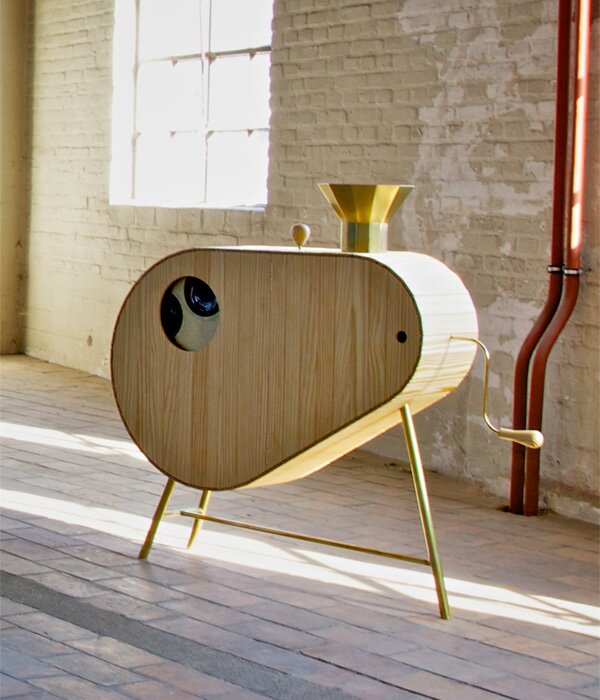
- A concept for a domestic plastic waste up-cycler that uses mycelium to break down plastic packaging waste.
- The paternoster waste up-cycler concept utilizes the properties of fungi that have powerful enzymes and decomposing power.
- A mycelium attached to plastic, would have the ability to decompose and metabolize the plastic.
- In this concept the plastics are ground into small chips and mixed with a fungal starter culture in a glass canister, which is slotted into a compartment of the ‘paternoster’ system.
- A hand-cranked conveyor moves the canisters along a circuit within a dark cavity. Each week plastic grounds are mixed with mycelium.
- It takes several weeks to break down the plastic or other waste material.
- At late stages in the cycle the contents are exposed to daylight (via an aperture) and air allowing the mycelium to sprout delicious mushroom fruit, ready to eat. The decomposing waste can be molded into shapes.
- The paternoster is made out of plywood and copper, and uses off the shelf bottles and containment canisters.


